
Confessions create communities: On the Fellowship of Evangelical Baptist Churches in Canada and its Affirmation of Faith

Beginning in the late nineteenth century, Baptist historians, and others, have squabbled over Baptist origins. In fact, these squabbles were so antagonistic at the turn of the twentieth century that they led to the president of The Southern Baptist Theological Seminary (SBTS), William Heth Whitsitt (1841-1911), resigning his presidency in 1899.
In more recent days, differences over Baptist origins have surfaced with questions being asked by such remarkable scholars as the Marxist Christopher Hill and the conservative evangelical Matthew Bingham as to whether we can speak about there being such a thing as a Baptist denomination in 1640s and 1650s.
With all due respect to the erudite scholarship of Dr Bingham in his Orthodox Radicals: Baptist Identity in the English Reformation, my own reading of the Particular Baptists texts from the 1640s and the 1650s leans strongly in the direction of the work of Barrie White (in my opinion the doyen of Baptist history up to the time of his home-going in 2016) that the First London Confession of 1644/1646 was essentially a liminal text, one that staked out boundaries. What was critical for White, and for I, following White’s lead, is that this confessional text restricts both membership and fellowship at the Lord’s Supper to those who have been baptized as believers by immersion. From this point, I think one can speak about the Particular Baptist denomination.
The main confessional text for this body of churches during the long eighteenth century was the famous 1689 Confession (the Second London Confession of Faith that was actually published in 1677/1688), which lies behind the Abstract of Principles of my seminary, SBTS. And despite the emphasis on the autonomy of the local churches of this community, one can rightly speak about the Particular Baptist churches as a denomination.
Confessions have a way of doing that: they delineate the boundaries of a community. Confessions create community.
Thus, Baptists have been confessional right from the get-go as it were even as the early Christians were with their rule of faith (see Irenaeus’ Adversus haereses, 1.10, for example, or Athanasius’ youthful Ἑνὸς σώματος) and confessional texts, the Creed of Nicaea and the Niceno-Constantinopolitan Creed (the Nicene Creed, that is).
The Fellowship of Evangelical Baptist Churches in Canada (FEBC)—which I have served for most of my life in Christ since 1982—was formed in 1953 around a statement of faith, a confession, that delineated its boundaries. In this document, there were, of course, the confession of primary issues, such as the Trinity, the deity of Christ, and sola fide and sola gratia. But there were also the confession of secondary matters such as believers’ baptism. Confessions such as this one do not imply that Christians who see things differently with regard to secondary matters are not Christians, but they do create community—in this case, a Baptist community.
And by the way, one can rightly speak of the Fellowship Baptist denomination—to say, as some do, that our body of body of churches is not a denomination but a fellowship is theological nonsense. Of course, this body of churches is a denomination, of which it has all of the trappings: head offices, home missions and foreign missions, annual gatherings, etc.
Christian denominations are created by confessions; and these confessions are liminal, they create boundaries. Hopefully, this liminality is about secondary matters and not tertiary issues. The distinction between secondary and tertiary issues is of vital importance here.1 In Romans 14, for instance, Paul deals with tertiary matters of food and holy days. In more recent history, the issue of the millennium should have been regarded as a tertiary matter.
Baptism, though, is not a tertiary matter: it is a secondary issue. One’s stance on it determines which community one belongs to. As a Baptist, I believe in the baptism of believers, not infants. I have many dear Paedobaptist friends, who are solid Christians, with whom I can work on many endeavours and from whom I have learned much (and in the most important matters of the gospel we agree as one), but on the matter of ecclesial identity we obviously must go our different ways.
Currently, there is a debate within the FEBC over the role of women in the public ministry of the church. In the late 1990s, the FEBC affirmed its commitment to complementarianism, though the affirmation was not one that was binding on the churches within the denomination. In recent days, some churches within the FEBC made a proposal to make it binding. A motion was brought to our annual denominational meeting last November to make it so, but it did not obtain the necessary percentage of votes to pass.
At the same time, a revised and expanded Affirmation of Faith was up for approval. All of the articles passed except the one on the church, which, it was felt obviously, did not clearly specify that ruling, teaching elders must be qualified men. A committee was then struck to come up with a clearer article on the matter over the next two years.
Involved in proposing the motion for making complementarianism binding on FEBC churches were a number of churches (8-10) in BC (as well as others across the FEBC). In the BC region of our denomination, they have interpreted our denomination’s complementarianism to mean that the “senior pastor” of the church must be a qualified man, but other pastors in the local church can be women. The 8-10 churches of this region that were involved in proposing the motion to make complementarianism binding across the FEBC have been deemed “divisive” by the region and next week, the BC churches are meeting to expel these churches for their “divisiveness.” Of course, in my mind, the real issue is that these churches take exception to the BC interpretation of complementarian.
In their defence, the BC region claims to be majoring on the primary issues of the Faith and that women in the ministry is a secondary issue. But then so is baptism, as I noted above. And by their logic, churches engaging in the baptism of infants can rightly belong to our denomination.
I am a complementarian by theological commitment. Of course, anyone who knows me, knows that I am indebted as an historian to the feminist movement. Critical here is the fact that one can learn from such a movement without becoming a partisan. In the 1990s, Feminist historians awakened me to the realization that evangelical historians like myself had failed to do justice to the vital role that women have played in transmitting and guarding the Faith and being models of piety (for example, to cite only biblical examples. see Sarah in Hebrews 11, the prophetess Huldah in 2 Kings and 2 Chronicles, Mary [theotokos] in Luke 1-2, or Lydia, the seller of purple in the book of Acts).
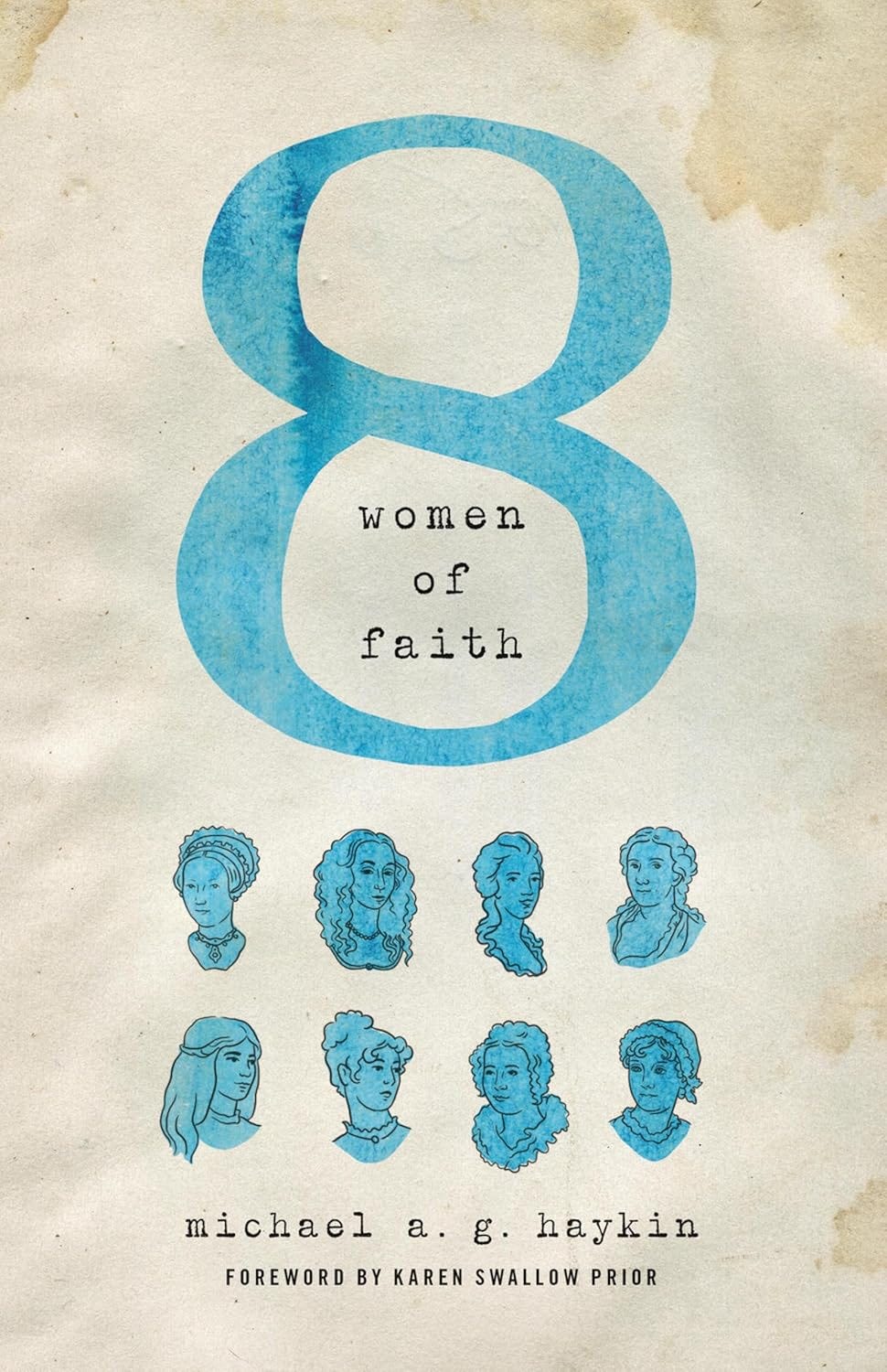
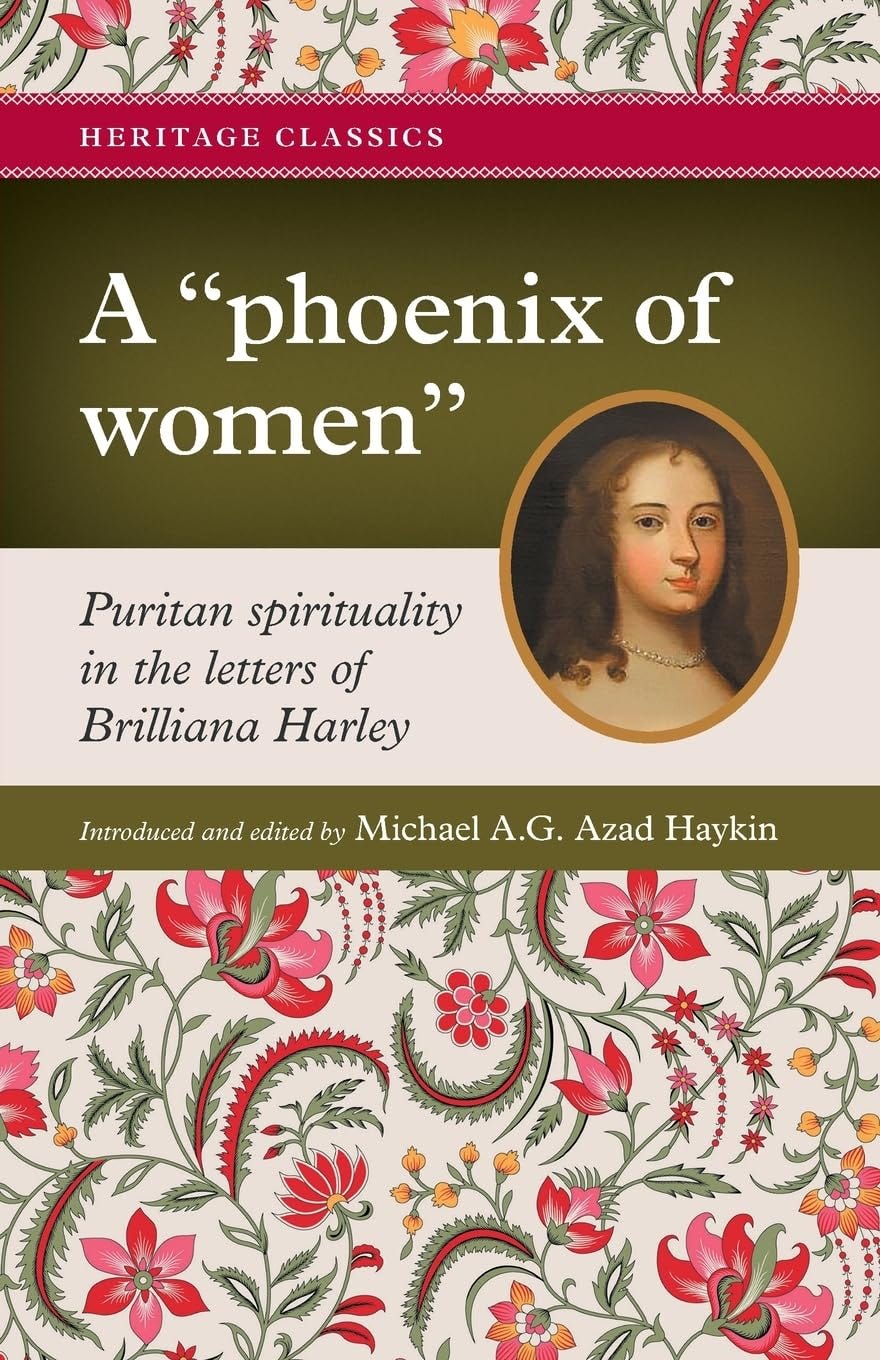
One fruit in my own life was my Eight Women of Faith (picture above). Another has been an ongoing focus on the lives of godly women like Perpetua and Macrina, Lady Jane Grey, Katherine Willoughby (the Puritan Duchess of Sussex—featured in my new book Light from the Word), Brilliana Harley (see below), the Baptists Anne Steele, Anne Dutton, and Maria de Fleury.
And I have been blessed to have learned much from a wide variety of contemporary female historians & theologians such as Megan DeVore, Stefana Laing, Gwenfair Adams, and Jessica Joustra, to name but a few whom I know.
In other words, I firmly believe that we should value and thank God for the ministry of women in our midst as did the early Church. Consider all of the women mentioned by Paul in Romans 16 (including Phoebe who probably read the letter to the Roman house churches after she had brought it to them) or the four daughters of Philip who were gifted as prophetesses (Acts 21) or the women, unnamed, who prophesied in the Corinthian assembly (2 Corinthians 11). So, I fundamentally disagree with those (and such do exist) who interpret the complementarian position as something akin to the patriarchal world of Islam.
And yet, 1 Timothy 2:9-15 seems an inescapable text, where Paul affirms that the office of a ruling teaching elder (I understand “having authority” and “teaching” in verse 12 to essentially designate the office of elder) to be restricted to a qualified man.
Is there a tension between 1 Timothy 2:9-15 and the passages that I have mentioned in the previous paragraph? To be sure there is. Yet, we must affirm wholeheartedly the truth in passages like Romans 16:1-2 or Acts 21:9 as well as 1 Timothy 2:9-15.
We must find the medium betwixt extremes, to paraphrase a work by the 17th century Baptist Benjamin Keach.
For this distinction I am indebted to R. Albert Mohler’s model of theological triage.
I believe your reading of the 1 Tim 2 is correct. And I believe it is not an issue, neither primary nor secondary, in which your church should be ostracized for and disassociated from the denomination. I’m very sorry.